


.avif)
.avif)
.avif)

iPhone Text Effects: Tips and Tricks
September 21, 2026

Plans


If you've seen the ads—the ones featuring Ted Danson ballroom dancing, painting a house, or draining a giant piggy bank—you know that Consumer Cellular has been advertising its services heavily over the last couple of years.
If it isn't clear from the commercials, Consumer Cellular is a senior-friendly prepaid carrier (or MVNO) that makes use of AT&T's and T-Mobile's coverage networks to provide cell phone service to its customers.
However, the carrier's cell phone plans aren't just for seniors, as younger users are sure to find value in them as well. In this article, we'll break down Consumer Cellular's plans, and point you to the best ones.
Why You Should Trust Us
I have over 10 years of experience writing about and reviewing mobile plans and phones. I’ve tried every carrier under the sun—and have some strong opinions about which ones are worth signing up for, and which you should steer clear of.
For this article, I focused on the following factors as it relates to service with Consumer Cellular:
- Overall value
- Plan features
- Cell phone coverage
- Quality of customer service
The following piece offers an honest look at how well Consumer Cellular fares in each of these areas.
{{consumer-cellular-proscons}}
{{consumer-cellular-unlimited-plan}}
{{consumer-cellular-5gb-plan}}
Signing up for multiple lines of service from Consumer Cellular allows you to save even more. The carrier offers discounts for each additional line; for example, the Unlimited plan goes down from $40/month to $30/month when you sign up for two lines, or $26.66/month when you sign up for three. The company isn't transparent about the costs for any more lines that that, as its website asks you to call them if you're seeking four or more lines.
Consumer Cellular uses both AT&T and T-Mobile's networks, automatically assigning each customer to whichever network offers better coverage in that person's specific area of the country. Take a look at the maps below to see what kind coverage the two networks offer:
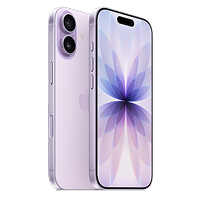
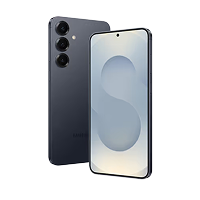
While Consumer Cellular is particularly well-suited to customers who bring their own phones to the network, the carrier does offer a tidy selection of devices for sale as well. This includes the new iPhone 18 Pro.
Prefer to bring your own device (BYOD) to Consumer Cellular? It’s easy to check your compatibility online via the carrier’s online tool, and fast to activate service if you have eSIM functionality in your phone (as most recent models do).
Consumer Cellular continues to stand out in 2026 as one of the most flexible and affordable prepaid carriers available—especially for users who value reliable coverage and straightforward pricing. With access to both AT&T and T-Mobile networks, customers can expect strong nationwide service and solid 5G performance.
{{sowi-plan-cta}}
If you use more data than your plan allows, Consumer Cellular automatically upgrades you to the next data tier for that billing cycle instead of charging overage fees.
Yes, as long as your phone is unlocked and compatible with their network. You can transfer your existing number when you switch.
Standard plans cover talk and text in the U.S., while international calling and roaming are available as pay-per-use options or through add-on packages.


If you're someone who tends to stay connected to WiFi most of the time—thereby limiting your cellular data consumption—signing up for a limited data (i.e. non-unlimited) cell phone plan can save you a bunch of money.
Take for example Consumer Cellular's 5GB plan, which includes just enough monthly cellular data to keep you connected when you're out and about and away from a WIFi connection. It costs $25/month normally, but goes down to $23.75 with an AARP membership.


Consumer Cellular's Unlimited plan is built for customers 50 and older, and it costs $35/month for a single line before taxes and fees. That gets you unlimited data with no monthly cap, so you won't have to watch your usage or worry about overage charges.
There's a trade-off. The plan includes no premium data, so all of your data is "deprioritized." That means when a cell tower is busy, other customers' traffic goes first and your speeds may slow down. Most of the time you won't notice. You're more likely to see it in crowded places like stadiums, airports, or downtown at rush hour.
Mobile hotspot works on 5G or LTE and uses the same unlimited data pool. You can share your connection with a laptop or tablet without a separate hotspot allowance to keep track of. Just keep in mind that hotspot data gets deprioritized too.












.png)